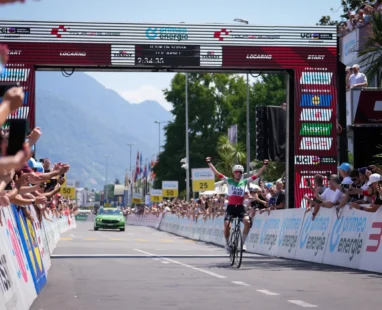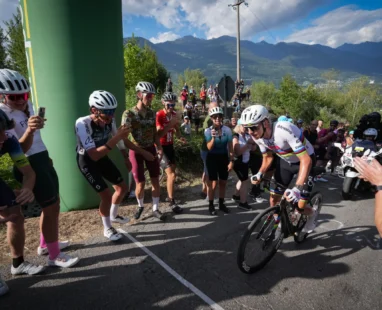


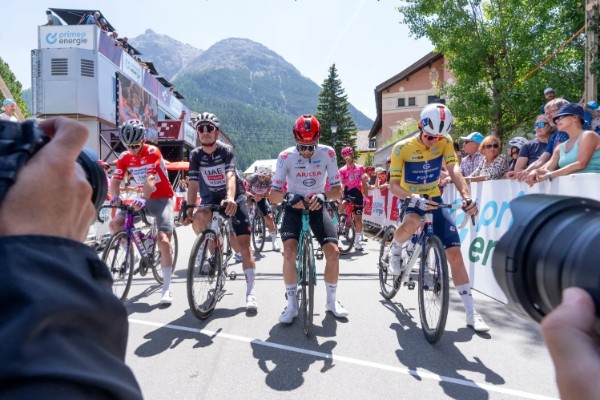

The Tour de Suisse 2026 presents a route with a clear profile: explosive, selective, and without classic transition stages. The 89th edition of the national tour leaves little room for tactical stalemates and promises excitement from the first to the final kilometre.
Day 1: Explosive start in Italy (Sondrio – Sondrio)
“We have designed a route that is demanding from day one and allows virtually no time to recover. Every stage has the potential to impact the overall classification,” explains Sports Director David Loosli.
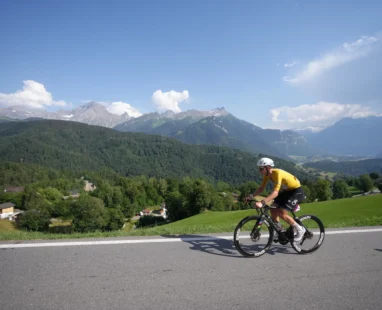
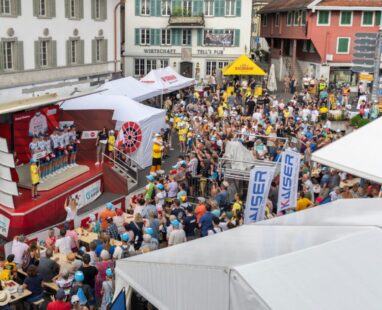
The start in Sondrio, Italy, sets the tone immediately. The circuit features constant ups and downs and is technically demanding, reminiscent of the Giro di Lombardia. A bunch sprint is practically ruled out. Instead, attacks, small breakaway groups, and an initial showdown among the general classification contenders are expected.
The women’s race features a slightly shortened final section. Nevertheless, the opening stage remains highly demanding, and the best climbers and GC contenders are likely to battle for the stage victory.
Day 2: Puncheurs in the spotlight in Ticino (Locarno – Locarno)
In the men’s race, stage two starts in Locarno, follows Lake Maggiore, and crosses Monte Ceneri. In the women’s race, the route heads directly from Locarno into the Valle di Blenio.
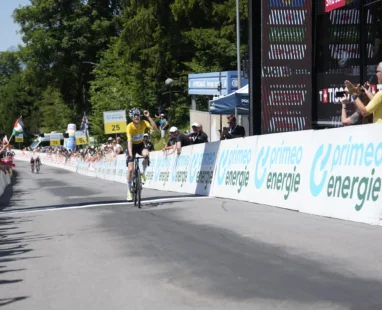
In both races, the finale promises excitement: two short, partly steep climbs shortly before the finish will create the decisive selection. “This stage is made for explosive riders. Those who excel on short climbs have a strong chance of taking the win,” says Loosli.
A bunch sprint is unlikely here as well. The stage victory will likely be decided among explosive climbers and all-rounders in both races.
Day 3: Tactical battle around Bad Ragaz (Bad Ragaz – Bad Ragaz)
The third stage of the men’s race introduces a new dynamic. Shortly after the start, the St. Luzisteig provides the first climb, followed by a route through the Principality of Liechtenstein and then towards the Appenzell region. The Schwägalp is the key challenge of the day, followed by a long flat section back to Bad Ragaz.
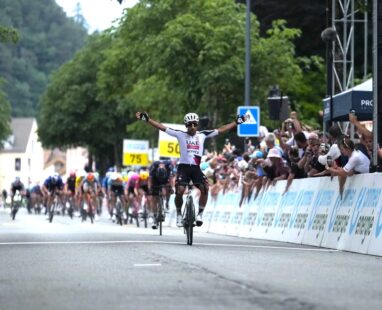
The key question: will the sprinters recover sufficiently after the Schwägalp to contest the stage win? “This is a classic tactical stage. For sprinters, it is the only realistic opportunity to win, so the pressure on their teams will be high,” explains Loosli.
In the women’s race, the stage also starts via the St. Luzisteig, then follows parts of the Rhine embankment towards Altstätten before turning back towards Bad Ragaz. Apart from a small mountain classification in the middle of the stage, there is little elevation gain. Sprinters are unlikely to miss this opportunity and are expected to fight for the stage win.
Day 4: Time trial as a key test (Aarburg – Aarburg)
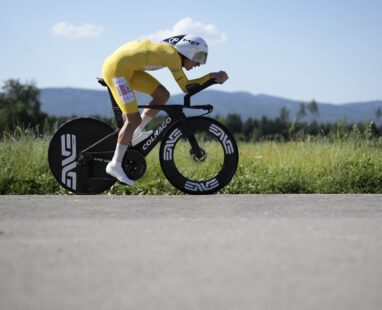
On the fourth day, strong time trial specialists competing for the overall classification can gain valuable time.
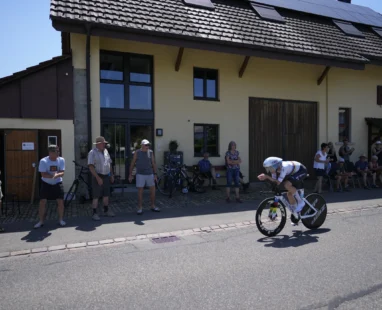
Both women and men will contest an identical individual time trial over 23 kilometres. With minimal elevation, the course is a classic specialist’s time trial: fast and technical.
Day 5: Queen stage (Villars-sur-Ollon – Villars-sur-Ollon)
The final stage is the queen stage—a relentless route over the Col de la Croix. The circuit features long climbs and fast descents, creating constant changes in rhythm with hardly any real recovery phases. The women will cross the highest pass in the Vaud Alps twice, accumulating around 3’000 meters of elevation gain. The men’s three laps add up to more than 4’000 meters of climbing.
“In this stage, it’s almost always either uphill or downhill. This is where the Tour is decided – and the overall classification can be completely turned upside down until the very end,” says Loosli.
Further information
Route visualisations and detailed information on all stages can be found in the stage plan on the official Tour de Suisse website, as well as in the accompanying video and on our social media channels.